

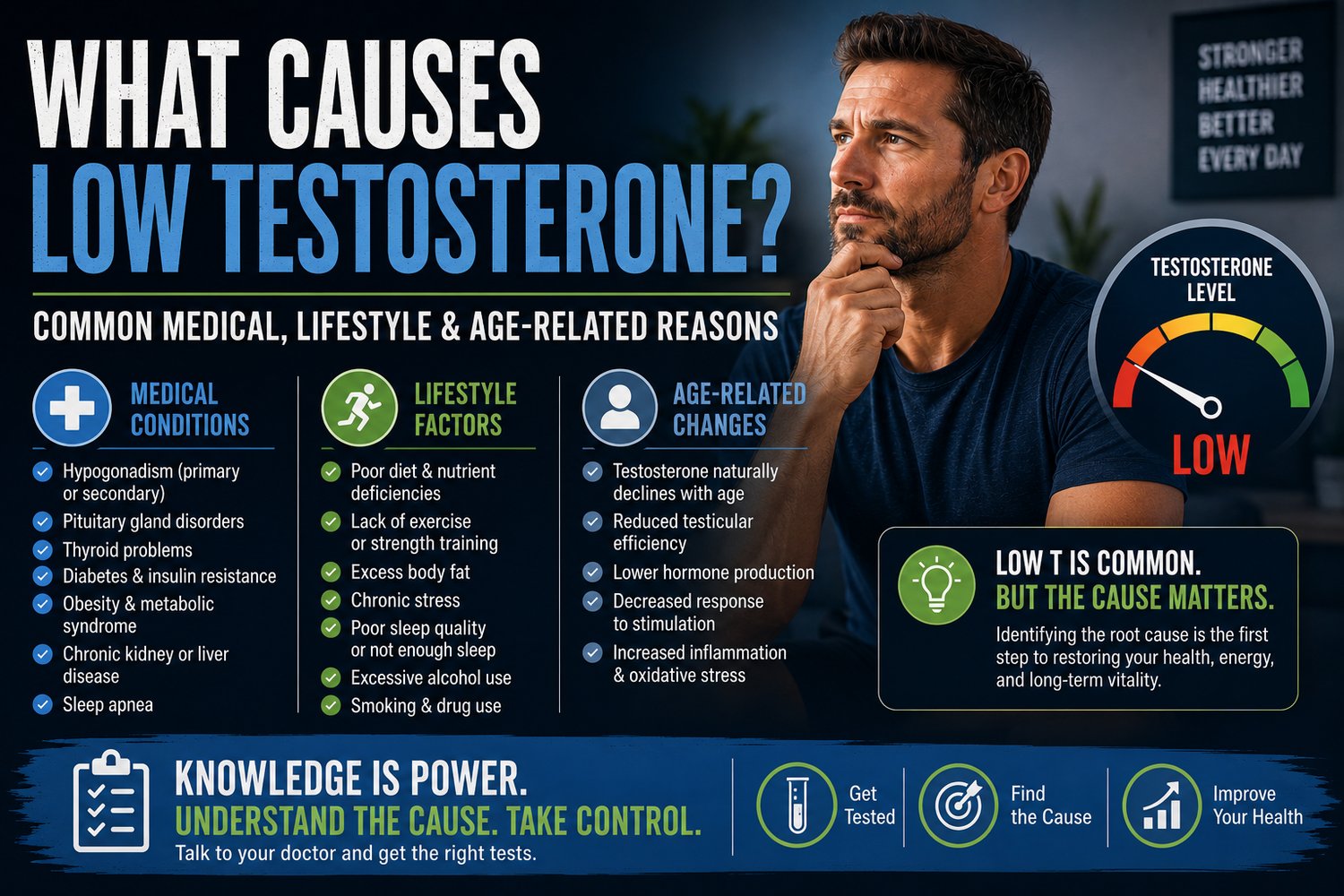
What Causes Low Testosterone? Common Medical, Lifestyle & Age-Related Reasons
Low testosterone can be caused by problems involving the testes, pituitary gland or hypothalamus, as well as obesity, certain medications, chronic illness, severe calorie restriction, sleep problems, anabolic steroid use, aging, and other health conditions. Sometimes more than one factor contributes at the same time.
That's why low testosterone isn't one condition with one cause.
If a blood test shows that your testosterone is low, the next question shouldn't automatically be:
“How do I raise it?”
The more useful question is:
“Why is my testosterone low?”
That distinction matters because some causes may be temporary or reversible, while others involve diseases or permanent changes that require medical evaluation and treatment.
A man whose testosterone is temporarily suppressed during severe illness is in a very different situation from a man with testicular failure.
And both are different from a man whose obesity, medications, sleep problems, and metabolic health may all be contributing at once.
Professional guidance therefore recommends confirming testosterone deficiency and investigating its cause instead of treating one number in isolation.
If you're still trying to determine whether your symptoms fit the picture, start with Low Testosterone Symptoms: 20 Signs Men Shouldn't Ignore.
How Testosterone Production Works
Understanding the causes of low testosterone is easier if you first understand where testosterone comes from.
Testosterone production depends on communication between the brain and the testes.
The process works roughly like this:
Hypothalamus → Pituitary gland → Testes → Testosterone
The hypothalamus releases signals that stimulate the pituitary gland.
The pituitary then releases hormones including:
- Luteinizing hormone (LH)
- Follicle-stimulating hormone (FSH)
LH helps signal the testes to produce testosterone, while FSH plays an important role in sperm production.
This system is often called the hypothalamic-pituitary-gonadal axis, or HPG axis.
A problem anywhere along that pathway can potentially lower testosterone.
Primary vs. Secondary Hypogonadism
When clinicians investigate confirmed low testosterone, one important question is where the problem originates.
Primary Hypogonadism
In primary hypogonadism, the main problem is in the testes.
The brain may be sending an appropriate hormonal signal, but the testes can't respond normally.
Potential causes include:
- Testicular injury
- Certain infections
- Chemotherapy or radiation
- Genetic conditions such as Klinefelter syndrome
- Other conditions that damage testicular function
Secondary Hypogonadism
In secondary hypogonadism, the problem involves the hypothalamus or pituitary gland.
The testes may still be capable of producing testosterone, but they aren't receiving adequate stimulation.
Possible contributors include:
- Pituitary disorders
- High prolactin
- Certain medications
- Severe obesity
- Some chronic illnesses
- Anabolic steroid or testosterone use
- Other hypothalamic or pituitary conditions
Measurements such as LH and FSH can help clinicians distinguish between these patterns.
For the complete diagnostic process, read How Testosterone Is Tested and Diagnosed.
Exploring Online TRT?
If you've already had appropriate testing and are considering testosterone treatment, you can compare online TRT options, provider features, lab requirements, treatment options, and other factors worth considering before signing up.
HabitLogics may earn a commission if you purchase through links on our TRT provider page, at no additional cost to you.
Common Causes of Low Testosterone
Some of the following are direct medical causes of hypogonadism.
Others are health conditions or physiological factors that can lower testosterone, contribute to low measurements, or complicate interpretation.
That distinction is important.
1. Aging
Testosterone levels generally decline as men get older.
But aging and hypogonadism aren't automatically the same thing.
A 45-year-old having a lower testosterone level than he had at 25 doesn't by itself establish testosterone deficiency.
The clinical picture still matters:
- Are compatible symptoms present?
- Is testosterone consistently low?
- Were measurements performed appropriately?
- Is there another identifiable cause?
- Are reversible factors contributing?
Terms such as “age-related low T” can blur the line between normal biological aging and a defined medical disorder.
Getting older alone isn't a reason to assume you need TRT.
2. Obesity
Obesity is one of the most important potentially reversible contributors to lower testosterone in men.
Excess body fat can affect hormone regulation through several mechanisms involving:
- Insulin resistance
- Inflammation
- Sex hormone-binding globulin
- Estrogen metabolism
- Hypothalamic and pituitary signaling
The relationship can also become cyclical.
Lower testosterone may influence body composition.
At the same time, excess body fat can contribute to lower testosterone.
That doesn't mean every man with obesity has hypogonadism.
But it does mean body composition and metabolic health should be considered when testosterone is low.
When obesity appears to be the major reversible contributor and no other cause has been identified, weight management may be an important first part of treatment rather than immediately moving to testosterone replacement.
For practical activity strategies, read Walking for Men's Health and Strength Training for Men Over 30.
3. Type 2 Diabetes and Metabolic Dysfunction
Type 2 diabetes and low testosterone frequently occur together.
Several overlapping factors may contribute, including:
- Obesity
- Insulin resistance
- Chronic inflammation
- Metabolic dysfunction
- Medications
- Other health conditions
Having diabetes doesn't mean testosterone therapy is automatically appropriate.
And testosterone treatment shouldn't be viewed as a substitute for managing:
- Blood glucose
- Blood pressure
- Body weight
- Physical activity
- Nutrition
- Cardiovascular risk
The underlying metabolic picture matters.
4. Chronic Illness
Several chronic medical conditions are associated with testosterone deficiency or disruptions in reproductive hormone signaling.
Examples can include:
- Chronic kidney disease
- Chronic liver disease
- HIV
- Severe systemic illness
- Certain inflammatory conditions
- Other serious chronic diseases
Chronic illness can affect testosterone through many pathways, including inflammation, weight changes, medication effects, altered metabolism, and changes in brain-to-testes signaling.
That's another reason testosterone results shouldn't be interpreted separately from the rest of your health.
5. Acute or Severe Illness
Testosterone can temporarily decrease during significant illness.
That matters when interpreting a blood test.
Suppose you normally feel well but have testosterone tested while:
- Seriously ill
- Recently hospitalized
- Recovering from a major infection
- Under major physiological stress
An unexpectedly low measurement during that period may not necessarily represent your usual baseline.
Appropriate repeat testing under more stable conditions may be necessary before labeling someone with permanent testosterone deficiency.
6. Pituitary Disorders
The pituitary gland plays a central role in testosterone production.
It releases LH and FSH, which help control testicular function.
Conditions affecting the pituitary can therefore cause secondary hypogonadism.
Possible causes include:
- Pituitary tumors
- Previous pituitary surgery
- Radiation
- Head injury
- Infiltrative disease
- Other pituitary disorders
This is one reason confirmed low testosterone sometimes requires more than simply repeating testosterone itself.
The pattern of other hormones can reveal where the problem may be occurring.
7. High Prolactin
Prolactin is another hormone associated with the pituitary gland.
When prolactin becomes abnormally elevated, it can disrupt normal reproductive hormone signaling and contribute to low testosterone.
Possible causes of elevated prolactin include:
- Certain pituitary tumors
- Some medications
- Other medical conditions
Depending on the clinical situation, a clinician investigating secondary hypogonadism may measure prolactin.
A testosterone prescription alone wouldn't identify or treat an underlying pituitary problem.
8. Testicular Injury or Damage
Damage to the testes can directly impair testosterone production.
Possible causes include:
- Significant trauma
- Testicular torsion
- Surgery
- Infection
- Radiation
- Chemotherapy
- Other injuries affecting testicular tissue
When the testes can't produce sufficient testosterone despite appropriate stimulation from the brain and pituitary, the resulting condition is considered primary hypogonadism.
9. Cancer Treatment
Certain cancer treatments can affect testosterone production and fertility.
Depending on the treatment involved, chemotherapy or radiation may damage:
- Testicular tissue
- Pituitary function
- Hypothalamic function
- Sperm production
The effects can vary considerably depending on the type of cancer, treatment, dose, and area being treated.
Men with a history of cancer treatment and symptoms suggestive of testosterone deficiency should discuss appropriate evaluation with their healthcare team.
10. Genetic Conditions
Certain genetic disorders can cause testosterone deficiency.
One well-known example is Klinefelter syndrome, which can impair normal testicular development and testosterone production.
Other genetic conditions can affect the hypothalamus, pituitary gland, or normal reproductive signaling.
Examples can include conditions such as Kallmann syndrome.
These causes aren't as common as obesity or age-associated changes in the general population, but identifying them can have implications for:
- Fertility
- Bone health
- Other hormone systems
- Long-term monitoring
- Treatment decisions
11. Hemochromatosis and Iron Overload
Excessive iron accumulation can damage organs and endocrine tissues.
In some people, iron overload can affect the pituitary gland or testes and contribute to hypogonadism.
This isn't something most men need to assume they have because of one low testosterone result.
But in the appropriate clinical context, iron studies or further evaluation may be part of identifying an underlying cause.
12. Opioid Medications
Long-term opioid use is a well-recognized cause of male hypogonadism.
Opioids can suppress signaling within the hypothalamic-pituitary-gonadal axis, resulting in lower testosterone in some men.
Possible symptoms can include:
- Reduced libido
- Erectile problems
- Fatigue
- Reduced muscle mass
- Fertility problems
If you're taking prescribed opioid medication and have symptoms associated with testosterone deficiency, discuss the issue with the clinician managing your treatment.
Do not stop an opioid prescription on your own.
The underlying pain condition, medication risks, and hormone effects all need to be considered together.
13. Glucocorticoid Medications
Long-term exposure to glucocorticoids such as prednisone can affect reproductive hormone function.
The effect depends on factors such as:
- Medication
- Dose
- Duration
- Underlying medical condition
- Other medications and health issues
Again, don't stop a prescribed corticosteroid because you're worried about testosterone.
Discuss the concern with the clinician managing the medication.
14. Anabolic Steroid Use
This one catches some men by surprise.
Using anabolic-androgenic steroids can suppress the body's own testosterone production.
When external androgens enter the body, the brain reduces signals such as LH and FSH because it detects that androgen exposure is already high.
That can reduce the testes' production of:
- Natural testosterone
- Sperm
Potential consequences can include:
- Testicular shrinkage
- Infertility
- Very low natural testosterone after stopping
- Sexual and mood symptoms during withdrawal or recovery
This is one reason a history of anabolic steroid use is relevant when investigating low testosterone.
15. Testosterone Use Itself
Prescription testosterone also suppresses the body's own testosterone production.
That's expected physiology.
TRT supplies testosterone externally, which reduces the brain's signaling to the testes.
This is one reason testosterone treatment can:
- Reduce LH and FSH
- Suppress sperm production
- Reduce testicular testosterone production
- Affect fertility
If someone stops TRT, the underlying testosterone problem may still be present, and natural hormone production may take time to recover depending on the individual circumstances.
Don't start or stop testosterone casually without discussing the implications with the clinician managing treatment.
For more, read What Is TRT? Testosterone Replacement Therapy Explained.
16. Severe Calorie Restriction and Low Energy Availability
Your reproductive system responds to whether the body has enough energy available.
Severe calorie restriction, rapid weight loss, or prolonged under-fueling can suppress reproductive hormone signaling.
This may occur alongside symptoms such as:
- Fatigue
- Reduced libido
- Poor recovery
- Declining exercise performance
- Loss of muscle mass
This is particularly relevant in men who combine aggressive dieting with high training volumes.
A sustainable calorie deficit is very different from chronically under-eating.
17. Excessive Exercise Without Enough Recovery
Exercise is generally good for health.
But more isn't infinitely better.
Very high training loads—particularly when combined with inadequate calorie intake, poor sleep, low body fat, and inadequate recovery—can suppress reproductive function.
This is more likely to be a concern in situations involving:
- Extreme endurance training
- Chronic under-fueling
- Excessive exercise volume
- Very low energy availability
- Inadequate recovery
The lesson isn't to avoid exercise.
It's to support exercise with enough nutrition, sleep, and recovery.
18. Poor Nutrition
Poor overall nutrition can temporarily affect testosterone and reproductive function.
That's especially relevant when someone is:
- Eating far too few calories
- Losing weight very rapidly
- Severely restricting entire food groups
- Experiencing significant nutrient deficiencies
The body needs adequate energy and nutrients to maintain normal physiological function.
But that doesn't mean eating a particular “testosterone superfood” will cure hypogonadism.
There is a major difference between correcting inadequate nutrition and trying to hack your testosterone with individual foods.
19. Nutrient Deficiencies
Deficiencies in nutrients such as zinc or vitamin D can occur alongside poor health and may affect normal physiological function.
The important word is deficiency.
Correcting an actual deficiency is reasonable.
Taking massive amounts of zinc, vitamin D, magnesium, or another supplement despite already having adequate status isn't the same thing.
More is not automatically better.
And a supplement isn't going to repair testicular damage or a pituitary disorder.
Read Healthy Habits Every Man Should Build Before Buying Supplements before spending money on “testosterone boosters.”
20. Extremely Restrictive Dieting
You'll sometimes hear that one particular macronutrient ratio is required for optimal testosterone.
Reality is less dramatic.
The larger concern is chronically inadequate nutrition.
An extremely restrictive diet may result in:
- Insufficient total calories
- Inadequate dietary fat
- Micronutrient deficiencies
- Poor exercise recovery
- Excessive weight loss
Dietary fat is necessary for normal physiology, but that doesn't mean a high-fat diet automatically increases testosterone.
Aim for a nutritionally adequate eating pattern rather than chasing a hormone-enhancing macronutrient trick.
21. Sleep Deprivation
Sleep and reproductive hormones are connected.
Severe or chronic sleep restriction can interfere with normal hormone regulation and can also produce symptoms that resemble testosterone deficiency.
Poor sleep can contribute to:
- Fatigue
- Reduced exercise performance
- Poor concentration
- Lower libido
- Changes in appetite and body weight
- Worse recovery
One bad night doesn't give you permanent low testosterone.
But repeatedly sleeping far less than your body needs while simultaneously trying to “optimize hormones” makes very little sense.
Read Sleep for Men: Why Better Sleep Matters for Testosterone, Recovery & Health.
22. Obstructive Sleep Apnea
Sleep apnea deserves separate attention because it's common, often missed, and overlaps heavily with symptoms marketed as “low T.”
Obstructive sleep apnea can cause:
- Loud snoring
- Gasping during sleep
- Repeated breathing pauses
- Daytime sleepiness
- Difficulty concentrating
- Poor recovery
- Sexual problems
Sleep disorders are also associated with hypogonadism, and obesity can contribute to both conditions.
If you're loudly snoring, gasping at night, or waking exhausted despite allowing enough time for sleep, don't simply treat the fatigue with testosterone boosters or caffeine.
Talk with a healthcare professional about the possibility of a sleep disorder.
23. Heavy Alcohol Use
Chronic heavy alcohol consumption can negatively affect reproductive and overall health.
It can also worsen several factors relevant to testosterone, including:
- Sleep
- Liver health
- Body composition
- Blood pressure
- Nutrition
- Metabolic health
Occasional alcohol use isn't the same thing as chronic heavy drinking.
But if alcohol intake is excessive, reducing it is a much more sensible health intervention than looking for a supplement to compensate for it.
24. Thyroid and Other Hormonal Disorders
Thyroid disorders can cause symptoms that overlap substantially with low testosterone, including:
- Fatigue
- Weight changes
- Mood changes
- Reduced libido
- Sexual dysfunction
Thyroid hormones can also affect proteins involved in carrying testosterone through the bloodstream, complicating interpretation of total testosterone measurements.
Other endocrine disorders may affect reproductive function as well.
That's another reason broader testing can sometimes be necessary when the clinical picture isn't straightforward.
Is Stress a Cause of Low Testosterone?
Stress is often oversimplified online.
You'll see claims that:
“Cortisol kills testosterone.”
Human physiology isn't that simple.
Severe chronic stress can certainly disrupt:
- Sleep
- Appetite
- Exercise
- Alcohol use
- Weight
- Recovery
- Mental health
Those effects can influence overall hormone health.
But treating every stressful week as a testosterone disorder—or buying a “cortisol blocker”—isn't useful.
Address the underlying stress and recovery problem rather than turning cortisol into another number to chase.
Sometimes Low Testosterone Has More Than One Cause
This is probably more common than neat internet explanations suggest.
Imagine a man who:
- Has gained significant body fat
- Has untreated sleep apnea
- Sleeps five hours per night
- Stopped exercising
- Has type 2 diabetes
- Uses opioids for chronic pain
Which one caused his low testosterone?
Potentially several.
Medical problems, medications, body composition, sleep, and lifestyle factors can overlap.
That's why reducing the entire situation to:
“My testosterone is 275, so I need injections”
misses the larger clinical picture.
Why Finding the Cause Matters
Different causes can require completely different responses.
Low Testosterone During Severe Calorie Restriction
Restoring adequate energy intake and recovery may be important.
Obesity-Associated Testosterone Suppression
Weight management and metabolic health may be central to the plan.
Long-Term Opioid Use
The medication and underlying medical condition need to be considered with the prescribing clinician.
Pituitary Disease
That requires evaluation of the pituitary—not simply a testosterone prescription.
Primary Testicular Failure
Testosterone replacement may be appropriate depending on symptoms, laboratory results, fertility goals, risks, and the individual situation.
You can't intelligently choose a treatment until you understand what you're treating.
What Tests Can Help Identify the Cause of Low Testosterone?
First, low testosterone generally needs to be confirmed.
One isolated result usually isn't enough to establish hypogonadism.
Once testosterone deficiency is confirmed, additional evaluation may include tests such as:
- LH
- FSH
- Prolactin
- SHBG
- Free testosterone when appropriate
- Thyroid testing
- Iron studies
- Other hormone testing based on the situation
In selected cases, clinicians may also consider:
- Pituitary imaging
- Genetic testing
- Semen analysis
- Other specialized evaluations
Not every man needs every test.
The workup should be guided by symptoms, testosterone results, physical findings, medical history, medications, fertility goals, and other clinical information.
Read How Testosterone Is Tested and Diagnosed: A Practical Guide for Men for the full diagnostic process.
What About At-Home Testosterone Testing?
An at-home test can provide an initial testosterone measurement.
The Everlywell Testosterone Test is one at-home option.
You can also visit the HabitLogics Men's Bloodwork Hub for additional testing and bloodwork resources.
The important limitation is:
A testosterone test can tell you a number. It can't automatically tell you why that number is low.
Low results and persistent symptoms deserve appropriate medical follow-up.
Track Testosterone in Context
One laboratory value is more informative when you can compare it with your broader health picture.
Relevant information may include:
- Previous testosterone measurements
- Weight
- Waist circumference
- Sleep
- Blood pressure
- Glucose
- Lipids
- Energy
- Symptoms
- Medications
- Other relevant laboratory values
The Men's Bloodwork Dashboard is designed to help organize testosterone, metabolic markers, lipids, body composition, and recovery data over time.
For a simpler starting point, download the FREE Men's Hormone & Energy Starter Kit.
Can Lifestyle Raise Low Testosterone?
Sometimes.
But the answer depends entirely on why testosterone is low.
Lifestyle changes may help when lower testosterone is associated with reversible factors such as:
- Obesity
- Poor sleep
- Severe calorie restriction
- Excessive training
- Poor overall nutrition
- Heavy alcohol use
- Low physical activity
Improving those factors is worthwhile whether testosterone rises dramatically or not.
But lifestyle has limits.
If someone has:
- Permanent testicular damage
- Significant pituitary disease
- A genetic condition affecting testosterone production
sleeping eight hours and eating more protein aren't going to cure the underlying disorder.
Healthy habits support normal physiology.
They aren't a universal treatment for every form of hypogonadism.
Read How to Support Testosterone Naturally for a realistic look at what lifestyle changes may—and may not—accomplish.
Don't Buy a Testosterone Booster Before You Know the Problem
Suppose your testosterone is low because you're severely sleep deprived.
A supplement probably isn't the answer.
Suppose you're genuinely deficient in a particular nutrient.
Correcting that deficiency may make sense.
Suppose you have primary testicular failure.
An over-the-counter “test booster” is unlikely to restore normal testicular function.
Or suppose a pituitary disorder is interfering with hormone signaling.
You need the pituitary problem evaluated.
That's why:
Cause comes before treatment.
The Testosterone Lifestyle Guide can help organize sleep, nutrition, strength training, stress, and recovery habits without pretending healthy routines can medically treat every cause of low testosterone.
Does Low Testosterone Mean You Need TRT?
No.
A low testosterone result doesn't automatically determine the treatment.
First, the result generally needs to be confirmed.
Then the underlying cause should be investigated.
Treatment can depend on:
- Symptoms
- Cause
- Repeat testosterone measurements
- Fertility goals
- Medical history
- Other health conditions
- Potential contraindications
- Risks and benefits
- Patient preferences
For some men with appropriately diagnosed hypogonadism, TRT may be a reasonable treatment.
For others, addressing an underlying reversible problem may be more appropriate.
And some men need additional medical evaluation before either decision can be made.
If you're at the treatment stage, read What Is TRT? Testosterone Replacement Therapy Explained.
Frequently Asked Questions
What causes low testosterone in men?
Low testosterone can result from testicular disorders, pituitary or hypothalamic problems, obesity, chronic illness, certain medications, anabolic steroid use, severe calorie restriction, acute illness, genetic conditions, and other medical or physiological factors.
Sometimes several contributors are present at the same time.
What is the most common cause of low testosterone?
There isn't one universal cause for every man.
Age, obesity, chronic illness, medications, metabolic conditions, and disorders affecting the testes or pituitary can all contribute.
The most likely cause depends heavily on the individual's age, health, medications, symptoms, laboratory results, and medical history.
Can being overweight cause low testosterone?
Obesity is strongly associated with lower testosterone in men and can contribute to reversible suppression of the reproductive hormone system.
Weight reduction may improve testosterone in some men when excess body fat is a major contributing factor.
That doesn't mean every man with obesity and low testosterone has the same condition or requires the same treatment.
Can lack of sleep cause low testosterone?
Severe sleep restriction can affect testosterone and reproductive hormone regulation.
Poor sleep can also cause fatigue, low libido, poor concentration, and other symptoms that resemble low testosterone.
Persistent sleep problems should be addressed regardless of testosterone level.
Can sleep apnea affect testosterone?
Sleep disorders including obstructive sleep apnea are associated with testosterone deficiency and can also produce many symptoms commonly attributed to low T.
Men with loud snoring, gasping, witnessed breathing pauses, or severe daytime sleepiness should discuss those symptoms with a healthcare professional.
Can stress cause low testosterone?
Chronic stress can influence sleep, eating, alcohol use, physical activity, body weight, and recovery—all of which can affect overall health and hormone function.
It's usually too simplistic to say that stress or cortisol alone “causes low T.”
Can medications lower testosterone?
Yes.
Long-term opioid use is a well-recognized cause of hypogonadism, and certain glucocorticoids and other medications may also affect reproductive hormone function.
Never stop prescribed medication without discussing it with the clinician managing your care.
Can steroids cause low testosterone?
Yes.
Anabolic steroid use can strongly suppress the body's natural LH, FSH, testosterone, and sperm production.
Low endogenous testosterone can persist after steroids are stopped, and recovery varies considerably between individuals.
Can TRT cause low natural testosterone?
External testosterone suppresses the body's normal hypothalamic-pituitary-gonadal signaling.
While taking TRT, natural testosterone and sperm production commonly decrease.
That's one reason fertility and the implications of long-term treatment should be discussed before TRT begins.
Can testosterone recover naturally?
Sometimes.
If the cause is reversible—such as severe calorie restriction, acute illness, certain lifestyle factors, obesity-associated suppression, or another treatable contributor—testosterone may improve when the underlying problem improves.
Other causes may be permanent or require medical treatment.
Does aging automatically cause low testosterone?
Testosterone generally decreases with age, but normal aging and clinically diagnosed hypogonadism aren't the same thing.
Diagnosis still requires appropriate symptoms or signs, consistently low testosterone measurements, and clinical evaluation.
Why is finding the cause of low testosterone important?
Because the treatment for obesity-associated testosterone suppression, a pituitary tumor, medication-induced hypogonadism, severe calorie restriction, and permanent testicular failure can be completely different.
A testosterone number alone doesn't tell you which problem you're dealing with.
Key Takeaways
- Low testosterone has many possible causes rather than one universal explanation.
- Problems can originate in the testes, pituitary gland, hypothalamus, or elsewhere in the body.
- Obesity, chronic illness, medications, severe calorie restriction, anabolic steroid use, sleep problems, acute illness, and other factors can contribute.
- Aging can lower testosterone, but getting older isn't automatically the same thing as having hypogonadism.
- Some causes of low testosterone may be reversible, while others are permanent or require specific medical treatment.
- One low testosterone result doesn't reveal the cause and usually shouldn't be treated as a diagnosis by itself.
- LH, FSH and other testing can help determine whether the problem is primarily testicular or involves brain and pituitary signaling.
- Lifestyle changes can support hormone health but can't cure every medical cause of testosterone deficiency.
- Low testosterone doesn't automatically mean TRT is the correct next step.
- Understanding why testosterone is low should come before deciding how to treat it.
Final Thoughts
A low testosterone number is the beginning of the investigation.
Not the end.
The smartest question isn't:
“How do I get my testosterone higher?”
It's:
“Why is my testosterone low?”
Maybe inadequate sleep, severe dieting, excess body fat, or another reversible factor is contributing.
Maybe a medication is affecting reproductive hormone signaling.
Maybe there's a pituitary disorder.
Maybe the testes themselves aren't producing enough testosterone.
Maybe several factors overlap.
Those situations require very different approaches.
That's why good testosterone care shouldn't revolve around chasing the highest possible number.
Confirm the result.
Look at your symptoms.
Review your medications and health history.
Investigate the cause.
Then decide what—if anything—actually needs treatment.
Continue the Testosterone Series
If you haven't already, start with:
Low Testosterone Symptoms: 20 Signs Men Shouldn't Ignore →
Next, learn exactly how low testosterone should be confirmed and investigated:
How Testosterone Is Tested and Diagnosed: A Practical Guide for Men →
Then understand treatment:
What Is TRT? Testosterone Replacement Therapy Explained →
For lifestyle strategies:
How to Support Testosterone Naturally →
And if you already have symptoms and appropriate lab results and are researching treatment options:
For the broader men's-health pillar, visit the Complete Men's Wellness Guide.
Affiliate Disclosure
Some links in this article are affiliate links. If you make a purchase through one of these links, HabitLogics may earn a commission at no additional cost to you. Recommendations are included only where they naturally fit the topic.
Educational Disclaimer
This article is intended for educational purposes only and should not be considered medical advice. Low testosterone can result from many different medical, medication-related, and physiological factors. Diagnosis and treatment should be based on symptoms, appropriately performed repeat laboratory testing, medical history, and individualized clinical evaluation by a qualified healthcare professional. Do not start, stop, or change prescription medications or testosterone therapy without appropriate medical guidance.